

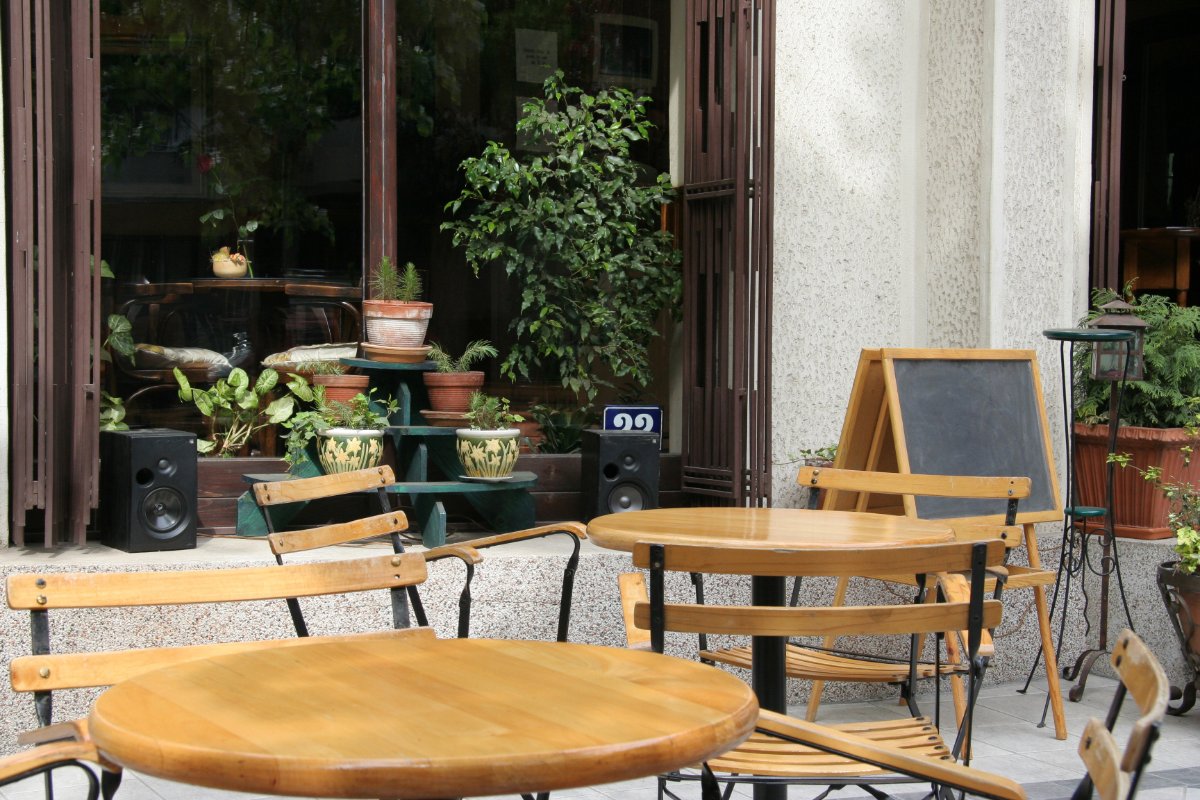
Most restaurant owners know that background music is important, and they spend hours searching for just the right playlist.
Unfortunately, many of these restaurateurs don’t think about where the speakers should be placed inside the space to share the background music they’ve so carefully selected.
Good speaker placement doesn’t require a full AV rework. A few simple strategies can help to make a big difference.
In this article, we’ll outline general placement principles for restaurants, giving you the tools you need to set up your speakers like a pro.
At a Glance: Restaurant Speaker Placement Guide
- Speaker placement affects customer experience. Dead zones, echo, and uneven volume can affect restaurant audio and may be related to speaker placement rather than music selection.
- More speakers at lower volume can provide more even coverage than fewer speakers at high volume. Distributing speakers across a space can help create consistent, comfortable audio that makes it easier for guests to hear one another.
- Different restaurant zones require different audio setups. A dining room, bar area, patio, and entrance all have distinct acoustic goals. Those goals should drive placement and volume independently.
- Ceiling height, room shape, and materials all affect speaker performance. Hard surfaces like tile and glass reflect sound and increase echo; soft surfaces absorb it. These factors should inform both speaker type and placement angles.
- Multi-zone control lets operators adapt audio in real time across service periods. Dayparting—adjusting background music by time of day—can be effective when the system supports independent zone control.
Ready to Pair the Right Sound System With the Right Background Music in Your Restaurant?
No credit card required. Terms and conditions apply.
Restaurant Speaker Placement: General Principles That Apply to Every Space
Foundational sound principles apply to every restaurant space. Think of them like a general roadmap you’ll customize as you set up speakers inside your unique establishment. Here’s what you need to know:
More Speakers, Lower Volume
The more speakers you deploy, the quieter each one can be. The result can be a warm, even soundscape within a room, without loud pockets, echoes, or quiet zones.
We recommend keeping the sound level at 60 to 78 dB within a dining space as a starting point. That’s generally loud enough to set a relaxing atmosphere but quiet enough to allow for gentle conversation.
Consider installing speakers inside your ceiling panels, spaced between 8 and 10 feet apart, using a qualified installer and following applicable building and electrical codes. That distribution can help provide even coverage throughout the space.
Account for Your Room’s Acoustic Properties
Every dining room is a little different, and those unique characteristics can alter a generic speaker placement plan.
Hard surfaces (like windows, tile floors, and exposed brick) reflect sound and increase echo, while soft surfaces (like carpet or acoustic panels) absorb it.
If your room is filled with things that might echo, you don’t need to remodel. Instead, consider wall-mounted speakers (instead of ceiling versions) that transmit sound at an angle, rather than pointing straight down.
Ceiling Height Changes Everything
If your ceilings are 12 feet or higher, standard ceiling-mount speakers may cause echoes and dead zones. Directional or drop-mount speakers can bring the sound closer to your audience, maintaining clarity where it matters most.
Tall rooms also tend to have more ambient noise and echo, meaning that you may need more speakers to overcome background chatter and sounds of silverware.
Plan Zones Before You Place Speakers
You should understand how you’ll use every corner of your space before you buy even one speaker.
For example, if you know you’ll want to play an upbeat playlist in the bar and quieter sounds in the dining room, your planned speaker runs should include that separation potential. Knowing your zones can make a substantial difference in a successful plan.
Choosing the Right Speaker Type for Your Restaurant
The speakers you choose should match your zone type, ceiling height, and aesthetic preferences. This table can help you make smart choices:
| Speaker Type | Best For | Key Benefit | Watch Out For |
|---|---|---|---|
| In-Ceiling (flush mount) | Dining rooms, lobbies, waiting areas | Discreet, even coverage | Not ideal for high ceilings without angling |
| Wall-Mounted | Bar areas, narrow corridors, patios | Directional control, easy to angle | Can create hot spots if too few units |
| Surface-Mount (pendant/exposed) | Industrial or open-ceiling spaces | Works without ceiling access | Aesthetics may not suit all concepts |
| Outdoor/Weatherproof | Patios, drive-thrus, exterior areas | Built for weather exposure | Wider spacing needed for coverage |
Speaker Placement by Restaurant Type
While general principles can apply everywhere, different restaurant formats have distinct acoustic needs, paces, and expectations. Customizing your plan accordingly is a smart strategy.
Full-Service Restaurants
People who enter full-service restaurants may linger over the meal, catching up with other guests as the food is brought right to the table..
A mix of background music types can help guide the atmosphere from one zone of the space to the other, but the background music should be quiet enough that it doesn’t impede conversation.
Recommended Speaker Setup
In-ceiling speakers spaced between 8 and 10 feet apart often work well in full-service restaurants. Zoning allows for a higher volume tolerance in high-energy spaces (like the bar) and quieter sounds in intimate spaces.
Weatherproof outdoor units can be useful for patios, with wider spacing to cover ambient noise from nearby traffic and pedestrian chatter.
A full-service restaurant may want different volume and playlist energy for brunch versus dinner service, which requires independent zone control.
Common Placement Mistakes in Full-Service Restaurants
Mistakes that are both common and easy to make include the following:
- Treating the bar and the dining room as a single zone, which can lead to background music that’s too loud in one space and too quiet in another
- Placing speakers only in the center of the room, rather than distributing them
- Ignoring the acoustic differences within the space, such as hardwood floors in the dining area and carpet in the lobby
Quick-Service Restaurants
In a quick-service restaurant, consumers often expect faster table turnover paired with a noisy, high-energy environment. They may expect to move through these spaces quickly and know they may hear things like food being prepared and guests ordering their meals.
The audio goal is to create a consistent sonic landscape that can run independently. Staff in these establishments generally don’t have time to make changes.
Recommended Speaker Setup
Ceiling speakers positioned toward customer-facing areas can work well in these spaces. They should play background music at a moderate volume, so the songs can be heard over the ambient equipment noise without being overwhelming.
Overhead audio messaging can help notify busy customers of specials and deals, and it can be used as an advertising channel in this space.
Common Placement Mistakes in QSRs
Typical mistakes made in these environments include the following:
- Placing speakers too close to the kitchen, as the noise of the crew can drown out the background music
- Running a single zone for the entire space, as ordering areas and dining areas have different volume needs
- Choosing consumer-grade speakers that aren’t designed to run continuously in areas with high humidity
Bars & Breweries
Of the four restaurant types we’ve mentioned, bars and breweries may place the heaviest emphasis on high-quality, well-defined background music. Consumers often expect to enter these spaces and engage with music. The trick is to manage the volume of the songs so it supports the party vibe without preventing conversation.
Recommended Speaker Setup
Wall-mounted or directional speakers pointed toward the guests can work well in these spaces.
A true, multi-zone approach is often useful for larger bars. For example, separate speaker clusters with slightly reduced volume can support more intimate conversations in booths. Bigger bass might be useful for dancing spaces. And kitchens typically want very little sound at all.
Common Placement Mistakes in Bars and Breweries
Typical mistakes made in these environments include the following:
- Adding too few speakers and trying to compensate with more volume
- Failing to account for ambient noise during peak hours
- Neglecting outdoor zones that require weatherproof units and significantly wider speaker placement
Coffee Shops & Cafes
Of the four types of restaurants we’ve mentioned, coffee shops and cafes are often the most intimate, with a narrow volume tolerance.
Background music can be a key part of the experience, but it should not intrude on the vibe. The challenge is to achieve coverage in a small space without any single speaker being too close to a guest.
Recommended Speaker Setup
Several in-ceiling speakers playing at a low volume can be effective in these spaces. They should be located far from designated quiet zones, and they shouldn’t be located over the cash register or espresso machine.
Coffee shops can also benefit from dayparting, which requires a system with scheduling capabilities.
Common Placement Mistakes in Coffee Shops & Cafes
Typical mistakes made in these spaces include the following:
- Placing a single speaker behind the counter, instead of distributing the sound throughout the space
- Misjudging volume levels by setting the sound when the space is empty
- Using personal streaming subscriptions (like Spotify),which are generally licensed for personal, non-commercial use only under their terms of service.
Comparison: Speaker Placement by Restaurant Type
This table provides a quick reference recap for the speaker recommendations we’ve outlined above:
| Restaurant Type | Volume Target | Recommended Speaker | Key Zone Consideration | Biggest Pitfall |
|---|---|---|---|---|
| Full-Service> | 60-65 dB (dining) | In-ceiling distributed | Separate bar + dining zones | Single zone for entire floor |
| QSR | 65-70 dB | Ceiling, customer-facing | Overhead messaging integration | Speakers too close to kitchen |
| Bar/Brewery | 70-80 dB at bar | Wall-mounted directional | Bar vs. lounge zones | Too few speakers = hot spots |
| Coffee Shop/Cafe | 55-62 dB | In-ceiling, small-format | Avoid counter/equipment zone | Single speaker behind counter |
Meet CloudBox: Built for Multi-Zone Restaurant Audio
CloudBox is a hardware component designed to connect a restaurant’s speaker system to Pandora CloudCover’s background music and zone management platform.
Once connected, CloudBox is described as providing zone control and multi-location management from one login. CloudBox pairs with the speaker types and zone structures covered throughout this guide.
Why Restaurant Operators Choose Pandora CloudCover
Pandora CloudCover offers fully licensed background music for business use, along with tools designed to support control of sound across restaurant locations.
Features such as zone control, dayparting, and setup tools may make Pandora CloudCover a flexible choice for restaurants of different sizes. Try it for 14 days with no credit card required. Terms and conditions apply. Frequently Asked Questions
Frequently Asked Questions
How far apart should speakers be in a restaurant?
Speakers placed 8 to 10 feet apart can be a baseline, depending on the acoustics in your space and the expectations of your customers.
How many speakers does a restaurant need?
The number of speakers needed depends on the size, layout, acoustics, and coverage goals of the space.
Should restaurant speakers be in the ceiling or on the wall?
Many restaurants can benefit from ceiling speakers, but if your ceiling is very high, wall-mount speakers could be a good choice.
Can I use Spotify or Apple Music in my restaurant?
Personal streaming subscriptions, such as consumer Spotify or Apple Music plans, are generally licensed for personal, non-commercial use only. A dedicated business music solution can help ensure appropriate licensing for background music is handled correctly.
How do I control music in different areas of my restaurant?
This approach is called zoning. CloudBox is described as allowing operators to set up zones, playlists, and volume levels from a dashboard.
References
Restaurant Acoustics: A Soundscape Exploration and Case Studies. (2023). Proceedings of the Acoustical Society of America.
Assessing the Ease of Conversation in Multi-Group Conversation Spaces: Effect of Background Music Volume on Acoustic Comfort in a Café. (January 2020). Building Acoustics.
Auditory Contributions to Flavour Perception and Feeding Behaviour. (November 2012). Physiology & Behavior.
Influence of Sound Level on Diners' Perceptions and Behavior in a Montreal Restaurant. (March 2021). Applied Acoustics.
Legal Disclaimer: The materials on this website are provided for general informational purposes only and do not constitute legal advice. Any descriptions or references to products, services, or technologies represent opinion only and should not be construed as statements of fact. The information is provided “as is,” without any representation or warranty as to accuracy, completeness, timeliness, or fitness for a particular purpose. We disclaim all liability for actions taken or not taken based on this content or any linked materials. Links to third-party websites are provided for convenience only, and we do not endorse or assume any responsibility or risk for their content, products, services, or potential damages arising from their use.


