


Interrupting music with overhead audio messaging is a balancing act for any company, but an important one. Customers tend to appreciate music being played overhead but generally only tolerate messaging, especially messaging that feels purely like an advertisement. Frequent messaging can easily become irritating.
What works for one brand won’t necessarily work for another. For example, a 2023 paper in the International Journal of Research in Marketing found that smaller brands tend to benefit from advertisements that feel consistent and share commonalities with their competitors, while bigger brands can actually suffer from too much consistency. We’ll discuss strategies to modify your messaging to be more effective based on your industry, brand, and the scale on which you operate.
With Pandora CloudCover, you can automate messaging at the exact frequency you want much more easily with our music and messaging scheduling services. Automation can make your messaging scheduling much less of a hassle, and the right tools can help you visualize your current strategy and easily modify it as desired.
Explore overhead messaging for your business
No credit card required. Terms and conditions apply.
Key Factors That Influence Overhead Messaging Frequency
There are few common factors to consider when determining how often to play messages overhead to customers. When you understand these factors, you can avoid overplayed messages while still taking advantage of valuable opportunities to promote your brand, upcoming events, and more.
Industry Type & Foot Traffic
Different types of businesses generate different expectations for visitors. In a relaxed coffee shop that customers visit specifically to take a break, frequent messaging can be a bigger distraction than in a retail store, where customers are walking around looking for specific products and may be more interested in ongoing deals or upcoming events.
Foot traffic and the overall scale of the business are additional factors to consider. Larger operations that see many repeat customers may want to reduce the frequency at which they deliver messages. Customers may have already heard many of their advertisements and announcements before, either at the location or through different channels, such as over the radio or on the TV.
Smaller operations which see less traffic day to day may benefit from more frequent advertising (and similar types of messaging). Customers are less likely to have heard or seen a given message. Smaller operations usually have a greater need for reinforcing what their brand stands for and what deals they offer, as they simply are less present in the average visitor’s mind by default.
Customer Dwell Time
Another key element of overhead messaging is customer dwell time. This is the amount of time a given customer is going to spend time in a space where a business will be playing music and/or delivering messages over their speakers.
This is actually a relatively intuitive factor when messaging if one realizes that the actual problem with messaging typically isn’t “how often does a business play messages” but instead “how often does a business play messages to an individual customer.” If an individual typically only spends a small amount of time in a place where they might hear an overhead message, that message can be played more frequently without annoying any customers.
Number of Speakers & Zones
Consider how many speakers are in a location and if those locations are split into “zones” in which messaging in one zone may be less relevant if that same message was played in a different zone. For example, a retail business might want to play advertisements specific to gardening in their gardening section, but different advertisements elsewhere.
This type of zone management can be difficult for a business to easily do on its own, but our services are designed to make it easier. This type of zone-based management doesn’t only need to be customer-facing either. You can play fewer or simply highly specific messages in zones you know only employees frequent. You can even play no messages there.
Zone-based messaging can keep what you’re doing highly targeted and allows messaging to feel more dynamic.
Type of Messaging (Promotional vs. Informational vs. Brand-Oriented)
Different types of messaging should also affect what ideal messaging frequency may look like. Promotional messaging, meaning advertisements meant to promote a brand and its products/services, tend to be the “highest friction” type of overhead messages. While advertisements can be entertaining, customers don’t want to be advertised to in a way that feels frequent.
Informational messages, designed to deliver information to customers about events, important policies, and similar details are lower friction messages, as they often don’t feel as much like a company is trying to convince a person to make a purchasing decision (even if the message might actually be doing so). Overall, they just feel like they put less pressure on the listener. This can include information that arguably is advertising, such as mentioning an ongoing sale, if the message is lower intensity and feels less like it's actively pushing a customer toward any decision.
Brand-oriented messages help to reinforce your unique brand, whether it’s bringing up a company slogan, giving a mascot character some time to talk, or anything else that builds an image in the listener’s mind of your business. The ideal frequency of these types of messages is going to vary. It largely depends on their intensity.
Quick, low-intensity messages like briefly mentioning a slogan and wishing customers well can be played more than higher intensity, lengthy messages, like a mascot urging people to sign up for an event or check out a new product.
Time of Day, Day of Week, & Special or Seasonal Events
Time is an important factor for messaging. For example, customers may be less tolerant of messages during the very early and very late hours compared to the middle of the day. Days that might be busy, like Fridays, can also benefit from less frequent messaging if you know it may slow traffic and lead to a customer spending more time than typical in a location.
Special and seasonal events can also change what ideal overhead messaging looks like. If an event is soon, especially if it’s going to involve fun activities or big sales, it’s worth messaging about it more frequently than if it’s more distant or less likely to excite listeners.
It’s critical to update messaging once timed events pass. It can only cause confusion if you’re advertising events that have already happened and deals that are no longer active.
Recommended Overhead Messaging Frequency by Industry Type
Below is a table with recommendations for messaging frequency based on industry. The specifics of your location and particulars of any events also need to be considered.
| Industry | Messaging Frequency | Balance of Messaging |
|---|---|---|
| Restaurants | Frequent, 5+ per hour | Balanced mix of promotional, informational, and branded messaging |
| Retail Stores | Very frequent, 8+ per hour | Balanced mix of promotional, informational, and branded messaging |
| Hotels | Infrequent, 3+ per hour | Focus on informational and branding messaging, but with promotional content not unwelcome |
| Bars | Infrequent, 3+ per hour | Balanced mix of promotional, informational, and branded messaging, but with care to maintain the welcoming tone of the establishment |
| Coffee Shops | Infrequent, 3+ per hour | Balanced mix of promotional, informational, and branded messaging, but with care to maintain the welcoming tone of the establishment |
| Fitness Centers & Gyms | Fairly infrequent, 4+ per hour | Focus on informational content, with occasional promotions; branding often less essential than with other businesses |
| Financial Institutions | Very infrequent, ~1 per hour | Focus on informational content, with occasional promotions; branding often less essential than other businesses |
| Educational Settings | Unique, discussed below | Strong focus on informational messaging, with significant care if messaging anything promotional |
Discussed below are a few specifics relevant to each industry when considering messaging.
Restaurants
Restaurants are sort of a “baseline” location when it comes to messaging. Using music streaming for restaurants is pretty common. Many locations will play messages as part of their streams to build their brand, promote deals, and more.
Frequent messaging isn’t likely to hurt a location as long as you keep in mind the general tone of a location and aren’t disrupting it with messages you play. People come to restaurants to relax, but it’s often a louder atmosphere than something like a bar or coffee shop, so the occasional break in music is less disruptive.
Retail Stores
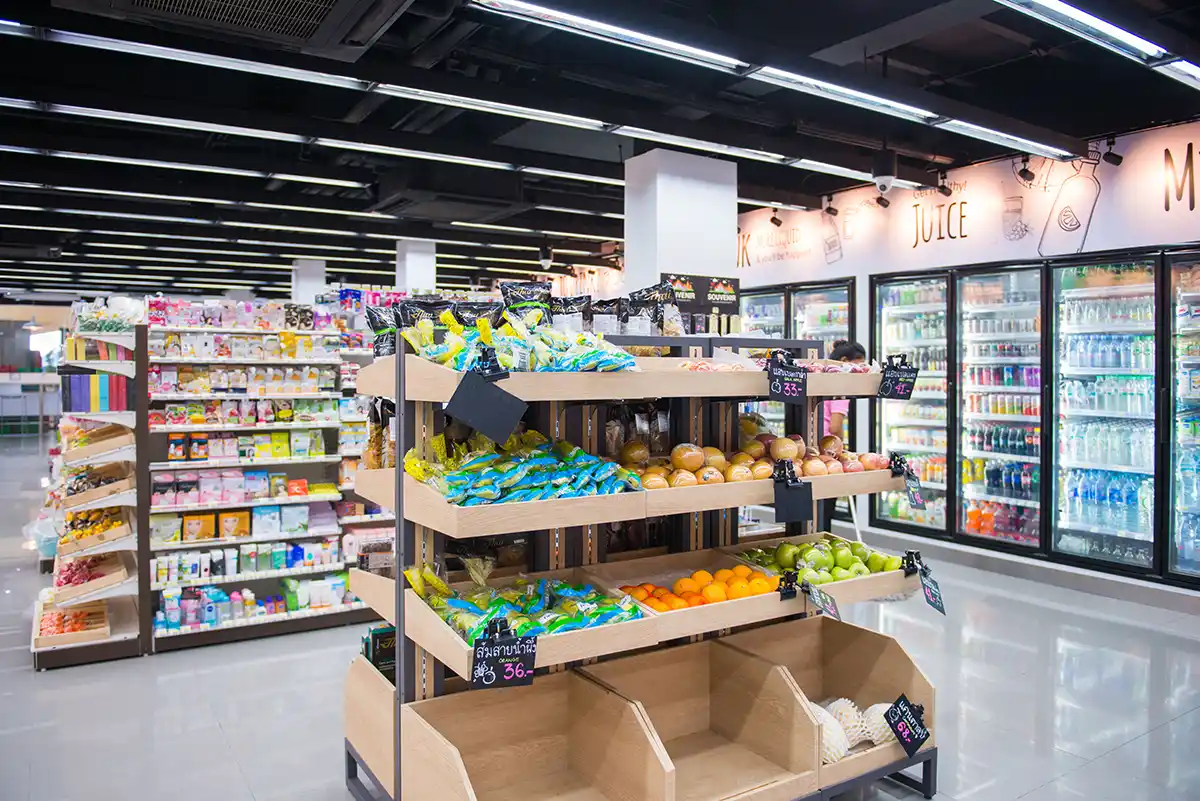
Possibly more than any industry, retail locations can benefit from regular messaging. Music for retail stores is basically essential, but it is very much the norm for that music to see regular breaks that inform customers about good deals, upcoming events, and anything else worth mentioning about the location.
Develop a good balance between different friction levels of messaging and avoid your messaging feeling too repetitive. A few different messages to deliver the same information can keep things fresh if a single customer might be at risk of hearing too many messages in a small span of time.
Hotels
Hotels and similar locations, like casinos, can benefit from messaging but should also keep in mind the concept of zones. Areas like spas or other places designed specifically for people to relax should put fewer breaks in music than higher energy areas, like a casino floor, or places like reception, where customers won’t spend much time.
If you want music for hotels and similar locations, you may want to consider varying music by zones to fit the tone of each area. As with any business, the ideal approach to music and messaging depends on the specifics of your location.
Bars
Bars are the first example on this list of a location where customers are likely to spend significant time at a location relaxing on their own or with friends. While hotel clients also spend long periods on location, guests will often be in areas that don’t have speakers.
When done right, music for bars is generally very welcomed by customers. Messaging doesn’t have to be a major friction point between songs if it is infrequent enough that it doesn’t disrupt the mood. Again, aim for a balanced approach.
Coffee Shops
Like bars, coffee shops are often locations of relaxation. People may come frequently to take a break out of their day, and it’s important that an inviting tone is maintained. Music for coffee shops can be a great tool to set the mood. The specific songs played will depend on the type of coffee shop, such as more upscale, professional or more urban, indie.
Infrequent messaging, as with bars, is perfectly reasonable as long as it doesn’t disrupt the target mood you’re trying to set at the location. This messaging should often take a balanced approach.
Overt advertisements should be broken up by messages that are more informational. They should feel like they exist to establish a brand identity rather than push a customer toward particular purchase decisions.
Fitness Centers
Music for fitness centers and similar locations is often considered a mainstay, and occasional messaging is expected by most visitors. Many fitness centers don’t need a strong branding push, so they can focus on delivering information and the occasional promotion.
Just keep tone in mind. Many members may be tired and/or working hard, so you will often want to avoid causing irritation or wording that may make them feel discouraged about their current efforts.
Financial Institutions
Financial institutions are an interesting outlier when discussing messaging, as many visitors prefer that locations like banks are relatively quiet. Additionally, most visitors either spend very little time there or are discussing important matters for potentially an hour or longer that are linked to their financial well-being.
Music for financial institutions can be welcomed if calm, but messaging that takes a customer’s focus has the potential to distract them or cause friction during situations that may already be stressful (like waiting in a long line or dealing with important financial matters). As such, messaging needs to be done with care and should usually focus on staying informational, with only occasional overt promotion.
Educational Settings
In educational settings, use special care in how you message to students, especially if those students are still minors. Most zones of an educational setting should have speakers silent during class hours. Advertising to what is often a more “captive” type audience (where students may need to stay at a location for multiple hours) can feel invasive and annoying, especially over several days of visiting in the same week.
Universities have moderately more leeway, as music gently playing in halls and rest areas with occasional breaks for event announcements and ads isn’t as high friction as in a high school, where students have very little free time, will usually be at the location five days of the week during the same set of hours each day, and may have little (if any) say in their schedules or where they spend their time.
With this said, music for educational institutions is often welcomed if done right. It’s just messaging breaks that need to be used wisely.
Explore overhead messaging for your business
No credit card required. Terms and conditions apply.
Common Messaging Mistakes & How to Avoid Them
Avoid these common pitfalls with messaging, if possible.
Overmessaging Causing Fatigue
Many advertisers aim for customers to encounter an advertisement (across all mediums) specifically three times in a given week, at least as an ideal goal. More than that can start to feel repetitive and annoying, and less can just fail to lock in the information you’re hoping to deliver.
The risk in this thinking is trying to get all that messaging into one singular visit to a location. But it’s important to balance however much you want a customer to hear a message in a week with the amount they’ll actually tolerate.
Frequent messaging can be fatiguing. If a customer feels advertisements are too frequent and it disrupts the vibe they were hoping a location might have, they can get frustrated and, in the worst cases, even leave.
Undermessaging Missing Key Opportunities
On the opposite end of the spectrum, businesses need to deliver messages to their customers and potential customers. While overhead messaging isn’t the only way to deliver information, it is a good tool to bring a customer’s attention to deals, products, events, and more.
It is also specifically messaging to people at a location. You know they’re likely to want at least some of what that location offers.
Messaging too infrequently is leaving money on the table. If informing a visitor to a location about something that may build your brand or lead to sales won’t negatively impact their experience, there is essentially no reason not to do it, as long as the cost of that messaging is reasonable.
Messaging Repetition & Stale Experience
Again, it’s important to vary messaging, even if delivering the same information. Repetition can help a listener remember something, but frequent repetition can be irritating.
This can be especially true with high-energy messages, like loud advertisements that may have jokes with specific punchlines. These types of messages aren’t bad, but they can feel especially flat or annoying with repetition.
Individually, you want a listener to be getting messages that largely feel fresh. Messages they might hear multiple times should be short and unobtrusive. You don’t necessarily need to design messaging for outlier visitors (like those who stay unusually long or leave unusually quickly), but you should at least tailor messaging around the average visitor’s experience.
Not Optimizing Around Visitor Patterns
It’s important to optimize around visitor patterns. Imagine a location where visitors typically only come once or twice a month, are at the location for an hour, and then leave. That’s a very different pattern than a location where customers may visit multiple times a week with friends and spend several hours there.
Sit down and determine the specifics of how often a person usually visits a location and for how long. You can even categorize based on different types of customers, such as high spenders versus low spenders or new customers versus repeat customers. Understanding these patterns lets you customize messaging around them, optimizing your balance between delivering information a person may be unaware of versus keeping the average experience fun and low friction.
Get Started With Pandora CloudCover
If you’re looking for a messaging solution that allows your locations to play fully licensed music with no worries about legal hassle, check out Pandora CloudCover. We offer an easy way to customize how you deliver advertisements and more.
Try Pandora CloudCover's overhead messaging free today. Terms and conditions apply.
References
Consistency and Commonality in Advertising Content: Helping or Hurting? (March 2023). International Journal of Research in Marketing.
The Effects of Background Music Tempo on Consumer Variety-Seeking Behavior: The Mediating Role of Arousal. (August 2023). Frontiers in Psychology.
“The Part of the Music Industry That God Forgot”: Streaming and the B2B Background Music Industry. (June 2024). Journal of Popular Music Studies.
The Rhythm of Shopping: How Background Music Placement in Live Streaming Commerce Affects Consumer Purchase Intention. (November 2023). Journal of Retailing and Customer Service.